
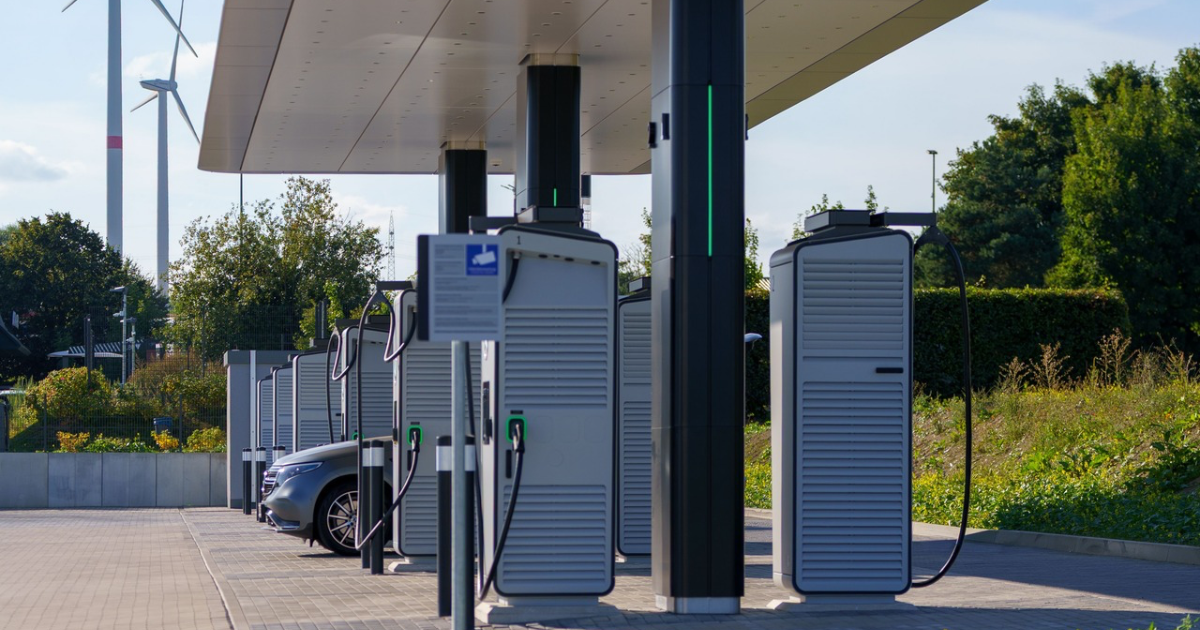
The deployment of electric vehicles is accelerating in Europe, and with it, the need for reliable, accessible, and interoperable charging infrastructure. To support this evolution and harmonize practices within the European Union, the AFIR (Alternative Fuels Infrastructure Regulation) establishes a common framework for the development of infrastructure dedicated to alternative fuels.
A new milestone is thus on the horizon as of January 1st, 2027, with the implementation of new requirements that specifically reference the EN ISO 15118-20:2022 standard for newly installed or retrofitted charging points.
What exactly does the AFIR entail? Who is affected by these new requirements? And most importantly, what changes will this 2027 deadline bring for charging station manufacturers? Let’s break down the key issues surrounding this regulatory change.
What is AFIR?
Definition and Objectives of AFIR
The Alternative Fuel Infrastructure Regulation (AFIR), mandated by the European Commission, establishes compulsory targets and requirements for deploying alternative fuels across the European Union. It is a critical element of the EU’s “Fit For 55” strategy, which aims to cut Carbon emissions by 55% by 2030.
Set to take effect in 2023, this regulation establishes requirements regarding the deployment of charging stations, their accessibility, and payment methods. But the AFIR goes beyond the number of available stations: it also establishes certain technical requirements designed to facilitate communication between electric vehicles and charging infrastructure.
These regulations aim to facilitate the development of charging infrastructure for electric vehicles and refueling stations for alternative fuels, harmonize practices, and make it easier to use electric vehicles in Europe.
Who is affected by these regulations?
- Charging infrastructure operators (CPOs).
- Manufacturers of charging stations and equipment.
- Electric mobility stakeholders and charging service providers.
- Member States and infrastructure managers.
What are the main requirements of the AFIR?
Infrastructure Deployment
EU member states have targets for the deployment of charging infrastructure, particularly along the Trans-European Transport Network (TEN-T). The goal? To ensure that European electric vehicle drivers have easy access to charging stations along the European Union’s major highways.
The AFIR mandates a minimum total power output based on the number of registered EVs:
- Battery Electric Light Duty Vehicles (BEV): At least 1.3 kW must be provided through publicly accessible recharging stations per vehicle.
- Plug-in Hybrid Light-Duty Vehicles (PHEV): At least 0.8 kW must be provided per vehicle.
This ensures that the public charging infrastructure scales directly with the growth in EV adoption nationwide.
Additionally, a distance-based target requires a public charging station every 60 km along the TEN-T core road network for light-duty vehicles.
For heavy-duty vehicles, the regulation aims to guarantee sufficient charging power along the TEN-T network:
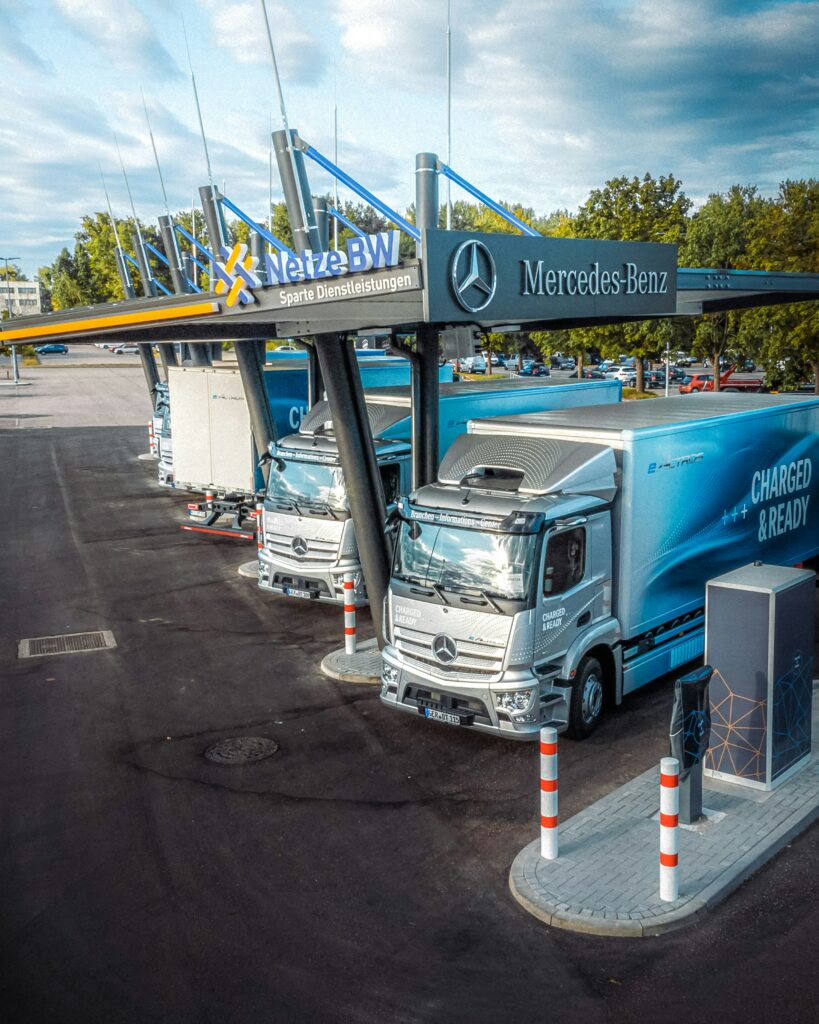
- By 2027: 50% of the TEN-T network must offer at least 2800 kW of power output per charging location, with a minimum of two 350 kW chargers per station.
- Final Objective (By 2030): The entire TEN-T core network must offer 3600 kW per station, and the comprehensive road network must offer 1500 kW.
These requirements are specifically designed to address the need for rapid charging of heavy-duty trucks, which typically have very large battery packs, maximizing their operational time on the road.
Interoperability and Digitalization
The harmonization of technical standards is a major challenge, as it is essential for enabling vehicles to charge at different charging stations. This requires facilitating interoperability between vehicles, charging stations, and the various stakeholders in the ecosystem.
This is perhaps the most impactful change for EV charging, potentially transforming the public AC charging business:
- ISO 15118-2 Support: Six months after the publication of the delegated acts (January 2026), all newly installed public charge points shall support ISO 15118-2.
- ISO 15118-20 Support: After January 2027, all newly installed and refurbished charge points shall support ISO 15118-20.
- Plug & Charge Parity: If the Plug&Charge functionality is supported for one version of the ISO 15118 standard, it must be offered in the other versions as well.
Operators must adhere to new specifications for providing open data:
- Static Data (e.g., location, services): Must be updated within 24 hours of any change.
- Dynamic Data (e.g., status, occupancy): Must be updated within one minute.
- Roaming Information: Operators must clearly indicate if roaming is possible and list the associated mobility service providers.
Operators must also provide additional information about their charging stations, including:
- Remote monitoring and control capabilities.
- User preference configurations for optimized charging.
- Bi-directional (vehicle-to-grid) charging support.
- Additional smart charging features (via free text).
Transparency and Payment
Publicly available charging points must offer an easy, ad-hoc payment option. This means supporting at least one of the following:
- A payment card reader.
- A contactless device capable of reading payment cards.
- For stations under 50 kW, devices utilizing an internet connection for secure payment transactions (e.g., QR Code).
Pricing for ad-hoc payments must be easily readable, clear, and explicit for the end-user. This regulation facilitates payment for drivers who do not subscribe to a specific charging service or who are traveling outside their eMobility Service Provider’s coverage area.
These requirements lay the foundation for a more accessible, transparent, and interoperable European charging infrastructure. But AFIR also goes further on the technical front: starting from 2027, new requirements will notably strengthen communication standards between electric vehicles and charging stations. It is in this context that the ISO 15118-20 standard takes on particular importance.
AFIR 2027: What Changes Are Coming for Charging Stations?
January 1st, 2027: A New Regulatory Milestone
January 1st, 2027, marks an important deadline for charging station manufacturers. Delegated Regulation (EU) 2025/656 specifies the technical requirements applicable to charging infrastructure, notably the EN ISO 15118-20:2022 standard.
As of that date, newly installed or retrofitted charging points must comply with the EN ISO 15118-20:2022 standard.
The scope of compliance is as follows:
- New or retrofitted charging stations,
- Public alternating current (AC) and direct current (DC) charging stations,
- Private charging stations in modes 3 and 4.
This does not mean that all existing charging stations will have to be replaced by January 1st, 2027. It primarily applies to charging stations that are newly installed or undergoing renovation.
Regulatory source: Delegated Regulation (EU) 2025/656 – EUR-Lex.
ISO 15118-20: What Does This Standard Change?
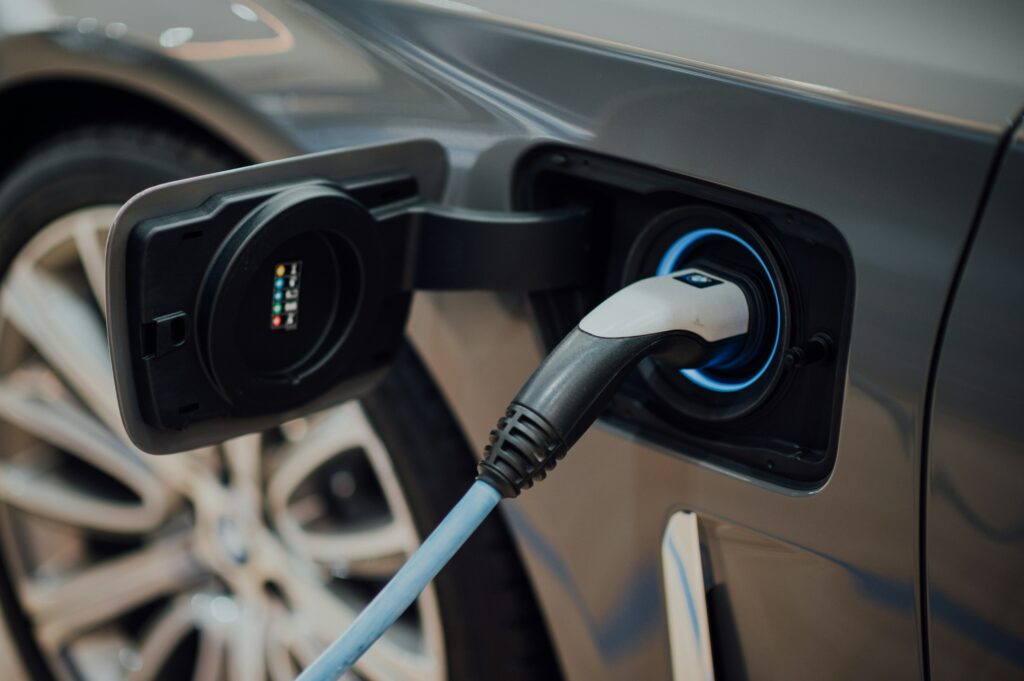
The ISO 15118 standard defines the communication protocols between an electric vehicle and a charging infrastructure.
The ISO 15118-20 version introduces new capabilities compared to ISO 15118-2, particularly regarding smart and bidirectional charging, focusing on three main areas:
- Smart Charging: enabling smarter management of charging power based on the needs of the vehicle, the building, or the grid.
- Plug & Charge: allowing the vehicle to automatically identify itself to the charging station without the user necessarily having to use an RFID card or an app. The new version of the standard streamlines these interactions by providing retry mechanisms in case an authentication method fails
- Bidirectional Charging: enabling energy exchange in both directions, particularly for Vehicle-to-Grid (V2G), Vehicle-to-Home (V2H), or Vehicle-to-Building (V2B) applications.
However, the electric vehicle fleet is heterogeneous: some vehicles still use the ISO 15118-2 standard, while new vehicles will gradually adopt ISO 15118-20. To ensure interoperability, charging stations must therefore be capable of managing this coexistence of versions in the cases specified by regulations.
For manufacturers, this particularly involves designing a software architecture capable of managing multiple generations of protocols.
What are the implications for charging station manufacturers?
The implementation of ISO 15118-20 is more than just a simple software update. For charging station manufacturers, this regulatory change entails concrete changes on several levels.
From a technical standpoint, the equipment must undergo significant upgrades. Manufacturers will need to verify that their hardware architectures have the necessary resources to support new features and future developments, particularly in terms of cybersecurity and cryptography.
Electronic components, communication controllers, and software must be adapted to meet the new requirements of this standard.
For certain existing charging station lines, this may require significant hardware upgrades.
Also, ISO 15118-20 is not natively supported by OCPP 2.0.1 or OCPP 1.6, and at the time this article was written, no whitepaper exists for this ; so OCPP 2.1 must be used. This creates an additional technical requirement to be met by charging station manufacturers by 2027.
Regarding interoperability, as we saw earlier in this article, the stakes are high.
A charging station compliant with ISO 15118-20 must be capable of communicating with vehicles supporting different versions of the standard. Coexistence with ISO 15118-2 therefore remains essential to ensure compatibility with the current vehicle fleet.
For example, if the Plug & Charge feature is offered for one version, it must be offered for all versions: an explicit requirement of AFIR.
The 2027 regulation is much more impactful for both DC and AC charging stations, as ISO 15118-20 requires TLS 1.3 to secure the communication between the EV and the Charging Station.
While this is a huge improvement on the cybersecurity level, it brings additional challenges for charging stations and electric vehicle manufacturers:
- TLS is not trivial to implement on microcontrollers
- TLS requires cryptographic operations and critical data storage using software or hardware based solutions
- Interoperability between the EV and the EVSE is not only on the protocol level anymore, but also on the Public Key Infrastructure level (EV having TLS secrets from a provider A must be able to communicate with a charging station with TLS secrets from provider B)
Finally, from a product development perspective, this deadline requires planning for R&D investments, longer compliance testing cycles, and a gradual overhaul of product lines.
All of these factors must be incorporated into product roadmaps now.
For manufacturers, the challenge is therefore twofold: meeting new regulatory requirements while anticipating technological changes in the market. So, what steps should be taken now to prepare equipment for the 2027 deadline?
How should manufacturers prepare for the 2027 deadline?
In light of these regulatory changes, the right strategy is not to wait until the last minute to become compliant.
Manufacturers who start preparing today have a decisive advantage: they have the time to test, adjust, and validate their solutions under optimal conditions.
- Audit of existing product lines. This involves identifying, line by line, which devices are already close to compliance, which can be updated via software, and which require more extensive hardware modifications. This assessment allows manufacturers to prioritize their efforts and avoid unpleasant surprises as the deadline approaches.
- Development and integration. For new generations of charging stations, ISO 15118-20 must be integrated from the design phase. This is the most effective way to control costs and ensure a robust implementation. For existing product lines, it is important to accurately assess what can be achieved through software updates and to promptly undertake the necessary hardware upgrades.
- Validation and interoperability testing. These tests are an essential step that is often underestimated. Testing communication between the charging station and different vehicle models, in various configurations, takes time. Planning these tests early on, and not just at the end of the development cycle, is essential to avoid last-minute roadblocks.
Relying on specialized technology partners can make a real difference. Whether it’s to access software stacks that are already compatible with ISO 15118-20, to test the compliance of implementations, or to build expertise on the standard’s specifications, working with experienced partners helps accelerate the transition and, above all, ensure its success.
How can Trialog support this transition?
Preparing for a regulatory deadline of this magnitude requires time, expertise, and the right tools.
This is precisely where Trialog steps in, supporting charging station manufacturers at every stage of their compliance with the new AFIR requirements, particularly the ISO 15118-20 standard:
- For development teams, Trialog offers its ISO 15118-20-compliant software stack, YaCCS, available for both alternating current (AC) and direct current (DC) charging stations.
These proven software building blocks help accelerate the integration of the standard, without having to start from scratch or tackle the complexity of its implementation alone. - For manufacturers seeking to reduce hardware development time, Trialog also offers off-the-shelf ISO 15118-20 communication boards in collaboration with its partners Watt&Well (EVI board) and Codico (Grapevine).
These ready-to-use components can be integrated directly into existing or new charging station architectures and can save several months on design cycles. - Compliance doesn’t end with integration, it must be demonstrated. That’s why Trialog offers ISO 15118-20 and ISO 15118-2 compliance validation tools, notably ComboCS, designed to rigorously test implementations and ensure that equipment meets the standard’s requirements.
Discover our full range of solutions for charging station manufacturers.
Beyond the tools, Trialog also supports its clients through qualification projects and technical training, so that teams can build their expertise on the standard’s specifications and best practices for implementation.
AFIR 2027: A Regulatory Evolution Paving the Way for Tomorrow’s Charging Infrastructure
AFIR does more than simply impose requirements; it lays the common foundation upon which tomorrow’s European electric mobility will be built.
By harmonizing technical requirements for charging infrastructure, it creates the conditions for a more reliable, accessible, and interoperable ecosystem for both drivers and operators.
The January 1st, 2027, deadline and the mandatory adoption of the ISO 15118-20 standard represent a pivotal step in this journey.
For charging station manufacturers, this should not be viewed as yet another constraint to be addressed urgently, but rather as an opportunity to evolve their product lines toward more advanced applications: smart charging, Plug & Charge, and bidirectional power exchange with the grid.
These technologies are now firmly established within the European regulatory framework. Manufacturers who begin preparing for them today will be best positioned to meet market expectations and offer equipment that rises to the new challenges of electric mobility.
Are you designing or developing charging solutions for electric vehicles? Anticipating regulatory changes today means preparing equipment that is compatible with the uses of tomorrow.
Contact our team to learn more about our solutions: emobilitysales@trialog.com